

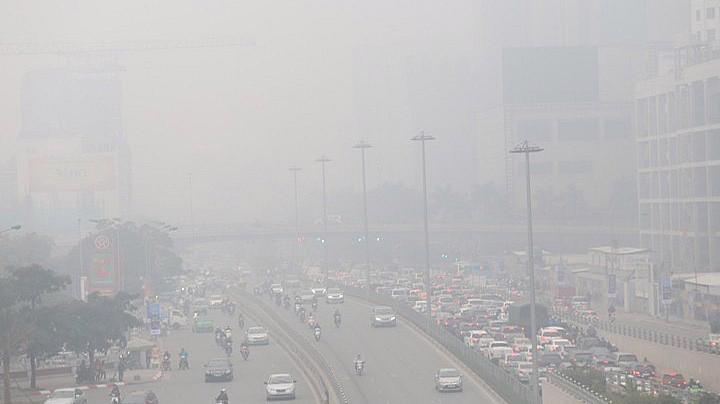
Battling Air Pollution: Challenges Faced by Residents of Hanoi
In recent weeks, residents of Hanoi have been grappling with the adverse effects of worsening air quality, as evident from the elevated Air Quality Index (AQI) in various districts, including Hoan Kiem, Cau Giay, Thanh Xuan, Ba Dinh, and Tay Ho.
Pam Air, a reliable source for tracking air quality trends in Vietnam, reported AQI levels exceeding 150 in these central areas, a classification deemed harmful to health. Notably, Hanoi has found itself among the top 15 most polluted cities globally, according to the global air quality monitoring app IQAir.
Dr. Hoang Duong Tung, Chairman of the Vietnam Clean Air Network, attributes the respiratory issues experienced by individuals like Anh Duc and Do Huyen to allergies triggered by fine dust and air pollution prevalent in the capital. The surge in air pollution during the months of October to March is a common occurrence, driven by factors such as calm winds, low precipitation, dense fog, and reduced air diffusion. These conditions result in pollutants lingering at lower altitudes, posing health risks to the city's inhabitants.
Research conducted in August 2021 by the Live&Learn environmental education program in collaboration with the Hanoi University of Public Health and the University of Technology of Vietnam National University sheds light on the severe health consequences of air pollution in Hanoi. In 2019 alone, the city witnessed 2,855 premature deaths attributed to exposure to PM2.5 particles, accounting for 12% of total mortality cases among those aged 25 and above. The study further indicates a notable increase in hospital admissions for cardiovascular and respiratory issues due to elevated PM2.5 concentrations.
Hanoi's air pollution crisis has prompted residents to adopt protective measures, including the use of masks, eyeglasses, air purifiers, and even relocating to less polluted areas. Despite these efforts, cases like that of Do Huyen illustrate the persistent challenges faced by individuals in maintaining their health amid the deteriorating air quality.
Dr. Tung acknowledges the city's initiatives to address air pollution, such as the development of electric buses, the relocation of industrial facilities, and restrictions on charcoal stove usage. However, challenges persist, notably due to insufficient control of pollution sources, including construction machinery, transportation vehicles, and emissions from nearby industrial facilities.
As residents grapple with the health implications of prolonged exposure to fine dust, the hope for rainfall or monsoons to alleviate the dense layer of pollution remains a prevalent sentiment among the city's inhabitants. Meanwhile, businesses catering to air quality concerns, such as online air purifier sellers, have witnessed a surge in demand, reflecting the growing awareness of the dangers posed by air pollution in Hanoi.
Source: Vnexpress - Hanoians struggle with air pollution